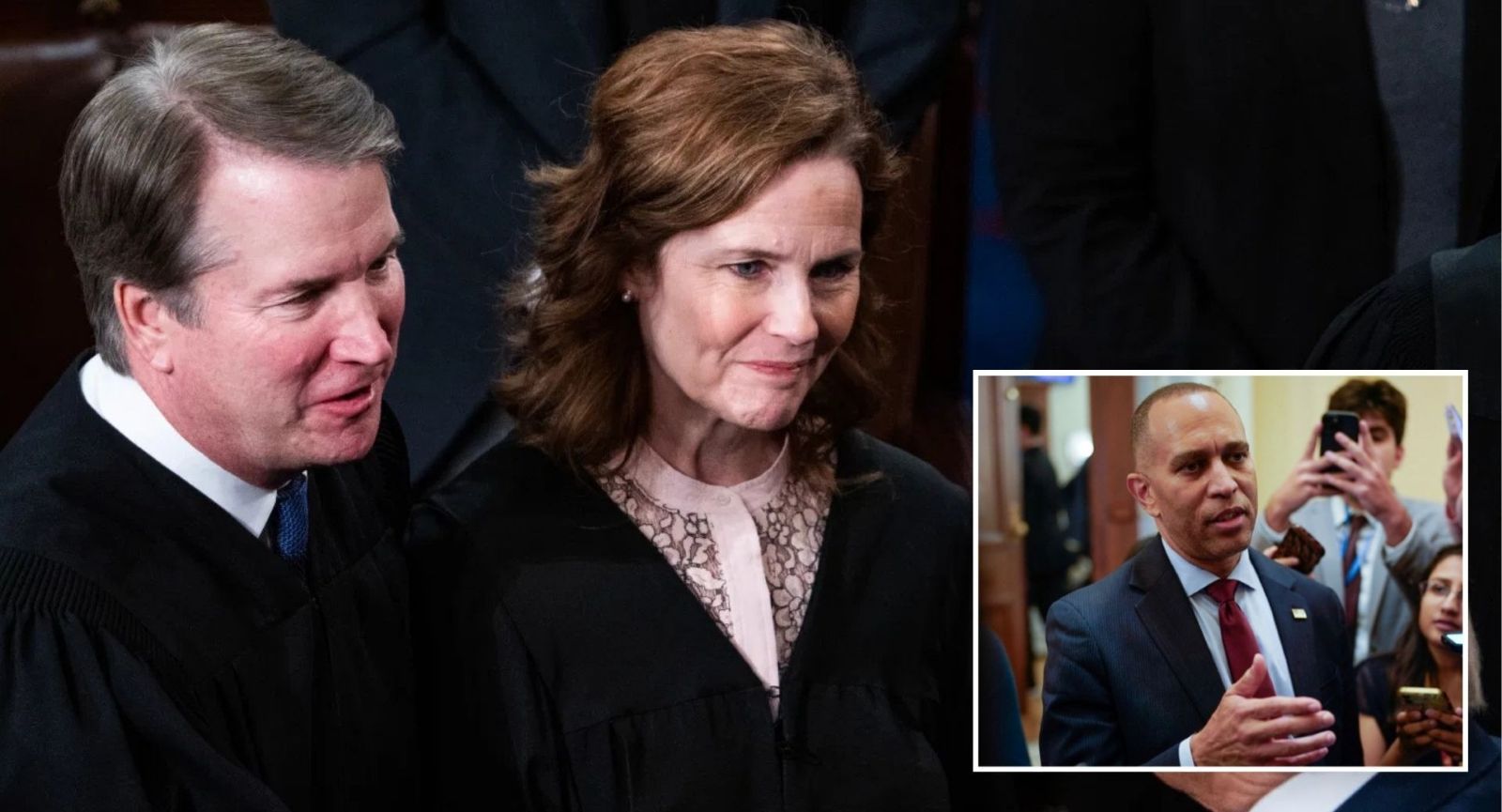
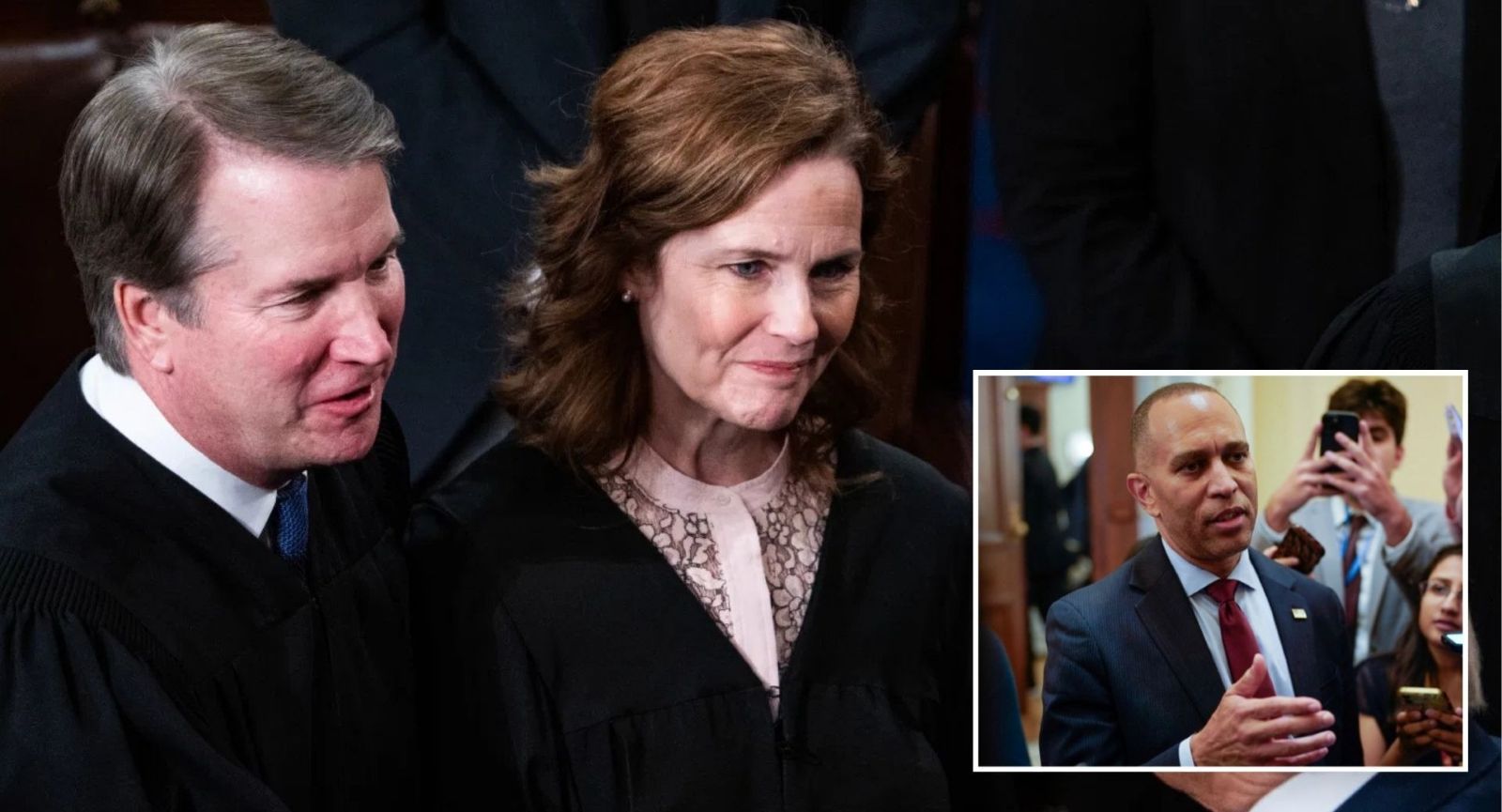
6-3 RULING - Supreme Court Deals Brutal Blow to Hakeem Jeffries
6-3 RULING - Supreme Court Deals Brutal Blow to Hakeem Jeffries
Washington, D.C. - June 5, 2026
Supreme Court Allows Alabama to Proceed with New Congressional Map for 2026 Midterms
The U.S. Supreme Court issued an unsigned 6-3 order on Tuesday permitting Alabama to use a newly enacted congressional district map in the 2026 midterm elections. The decision lifts a lower court injunction and is expected to result in a congressional delegation of six Republicans and one Democrat.
The ruling came after Alabama had already held its congressional primary elections in May. Alabama Gov. Kay Ivey signed legislation authorizing special elections in August for affected districts, contingent on final court approval of the map.
The order relied in part on the Purcell principle, which generally discourages federal courts from altering election rules close to an election. The majority stated that the district court had improperly intervened in Alabama’s efforts to conduct its elections under maps selected by the state’s elected representatives. The court noted that while federal courts should avoid last-minute changes, states retain authority to determine whether such adjustments serve their interests.
Connection to Voting Rights Act Precedent
The decision follows a 6-3 ruling issued by the Supreme Court on April 29 regarding the Voting Rights Act. That earlier decision established that claims alleging racial discrimination in districting generally require plaintiffs to demonstrate a strong inference of intentional discrimination before proceeding with litigation.
The current order addresses ongoing redistricting litigation in Alabama. The new map is anticipated to alter the composition of the state’s seven-member congressional delegation. Democratic Representatives Shomari Figures of the 2nd District and Terri Sewell of the 7th District are currently the only Black members of Alabama’s House delegation. The new configuration could affect representation in one of those districts.
Dissenting Opinion
The three liberal justices dissented from the unsigned order. Justice Sonia Sotomayor wrote that the majority’s approach had created turmoil and harm. She argued that the court was doubling down on prior decisions that she viewed as undermining protections under the Voting Rights Act.
Broader Redistricting Context
The Alabama case is one of several redistricting disputes before the Supreme Court involving states such as Louisiana, Texas, Virginia, and California. With control of the U.S. House expected to be closely contested, these cases have taken on added significance for both parties ahead of the November elections.
The Supreme Court’s recent interventions have already influenced district boundaries in multiple states. Additional litigation remains pending, and further developments could continue to shape the partisan balance of the House in the upcoming midterm cycle.
The Alabama order permits the state to move forward with its chosen map while legal proceedings on related matters continue. The full impact on the composition of Alabama’s congressional delegation will depend on the outcome of the August special elections and any subsequent legal challenges.
Top Democrat SHREDDED After Backing Graham Platner - His Career Is Over

Washington, D.C. - June 7, 2026
Rep. Ro Khanna Endorses Graham Platner for Maine Senate Despite Allegations of Past Misconduct
Rep. Ro Khanna (D-Calif.) has publicly endorsed Graham Platner, the Democratic candidate for U.S. Senate in Maine, even as Platner faces allegations of abusive behavior in past relationships. A New York Times report this week detailed claims from an ex-girlfriend alleging volatile and abusive conduct.
Platner has denied the allegations of physical abuse. In an interview with MSNBC’s Chris Hayes, he stated that the ex-girlfriend was lying about the abuse claims. He also criticized the media coverage as “journalistic malpractice” and accused the whistleblower of political motivation.
Platner has additionally addressed a Nazi-themed tattoo he received, stating that he did not know the design at the time it was applied. He described allegations that he knew the tattoo’s meaning as politically motivated.
Khanna’s Defense of Platner
Khanna acknowledged the New York Times report and described some of Platner’s past relationships as “toxic and volatile.” He stated that no one should make excuses for the past conduct or attack the women who came forward. Khanna added that Platner has “sought redemption,” “took accountability,” and has “worked to be a better man, a better human being.”
During a rally for Platner in Maine, Khanna attributed some of the candidate’s past difficulties to his service in the War on Terror, suggesting that the experience “broke” him and thousands of other veterans. He stated that sometimes the country itself feels “broken.”
Platner previously made public comments blaming women for being raped, which have also drawn criticism during the campaign.
Campaign Context
Platner is seeking the Democratic nomination for the open Senate seat in Maine. The race has drawn national attention as Democrats work to retain or expand their presence in the chamber. Khanna, often described in media reports as a progressive voice within the party, has positioned his support for Platner around themes of personal growth and accountability.
The allegations and Khanna’s response have generated discussion within Democratic circles about candidate vetting and standards for elected officials. Platner has maintained that he is committed to moving forward and representing Maine in the Senate.
The Democratic primary in Maine remains competitive, with vote counting and candidate positioning continuing in the weeks ahead of the general election.
Judge Delivers Ruling on Mail-In Ballots as Election is Too Close To Call
Washington, D.C. - June 7, 2026
Federal Judge Denies Immediate Injunction Against Trump Executive Order on Mail-In Voting
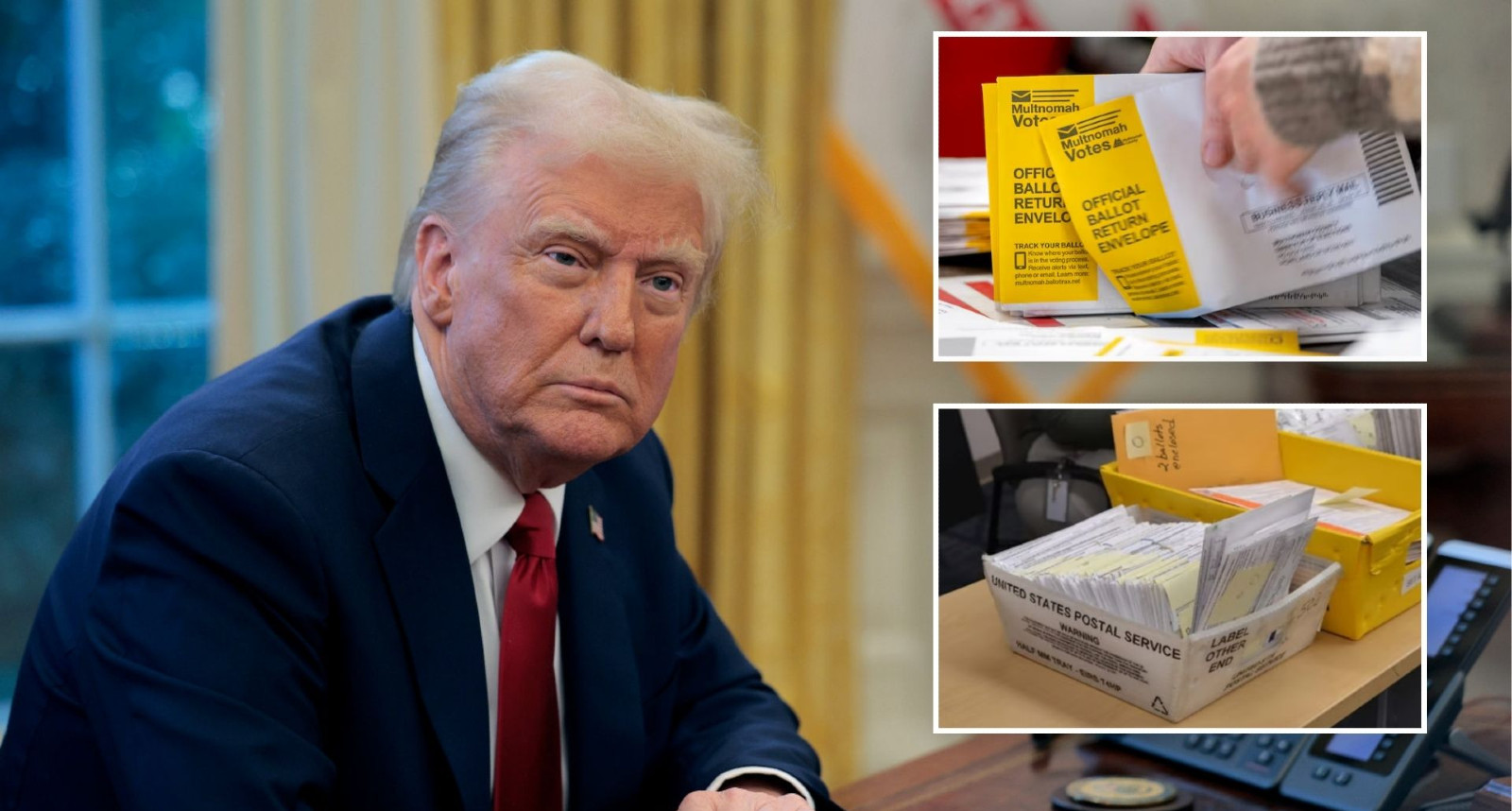
U.S. District Judge Carl Nichols ruled on May 28 that a request by Democrats for a preliminary injunction against President Donald Trump’s March 31 executive order on mail-in voting was premature. The judge concluded that federal agencies had not yet taken concrete steps to implement the order, so no immediate harm had been demonstrated.
Trump’s executive order directs federal agencies to compile a list of confirmed U.S. citizens and requires the U.S. Postal Service to deliver mail-in ballots only to voters appearing on approved state mail-in voting lists.
Democrats challenged the order in court, arguing that it exceeds presidential authority and could affect voting access for millions of Americans. Nichols did not issue a ruling on the legality of the executive order itself. He determined only that the plaintiffs had not shown sufficient grounds for immediate judicial intervention at this stage.
The decision leaves existing voting procedures unchanged for now. No alterations to how Americans currently cast ballots have taken effect as a result of the ruling.
Appeal and Ongoing Litigation
The Democratic Party has formally appealed the May 28 decision. Legal challenges to the executive order are proceeding on multiple fronts. A separate lawsuit filed in Massachusetts by several voting rights organizations seeks to block portions of the order. A federal judge in Boston is scheduled to hear arguments in that case.
On May 29, the U.S. Postal Service proposed a rule that would require states to provide lists of voters who receive mail-in ballots. The proposal is undergoing a 30-day public comment period before any final action.
The Massachusetts lawsuit was brought by groups including the League of Women Voters, the League of Women Voters of Massachusetts, the Association of Americans Resident Overseas, the U.S. Vote Foundation, OCA–Asian Pacific American Advocates, and Delta Sigma Theta Sorority, Inc. The plaintiffs are represented by organizations including the American Civil Liberties Union, the Brennan Center for Justice, the Legal Defense Fund, Asian Americans Advancing Justice, and LatinoJustice PRLDEF.
Plaintiffs’ attorneys argued that the Constitution reserves authority over election rules to the states and Congress, not the president. They expressed concern that the order could affect organizations assisting voters who rely on mail-in ballots, including overseas voters, military families, seniors, voters with disabilities, students, and rural residents.
Administration Position
May you like


The administration has defended the executive order as a measure to strengthen election security and improve verification processes. The Justice Department has not yet commented on the appeal of the May 28 ruling.
The executive order remains in effect while litigation continues. Federal courts are expected to play a significant role in determining the scope of presidential authority over election procedures in the coming months. Multiple lawsuits are advancing simultaneously, and additional rulings are anticipated before future federal elections.