Hakeem Jeffries ERUPTS After Republicans GAIN House Seat - Total Meltdown in D.C
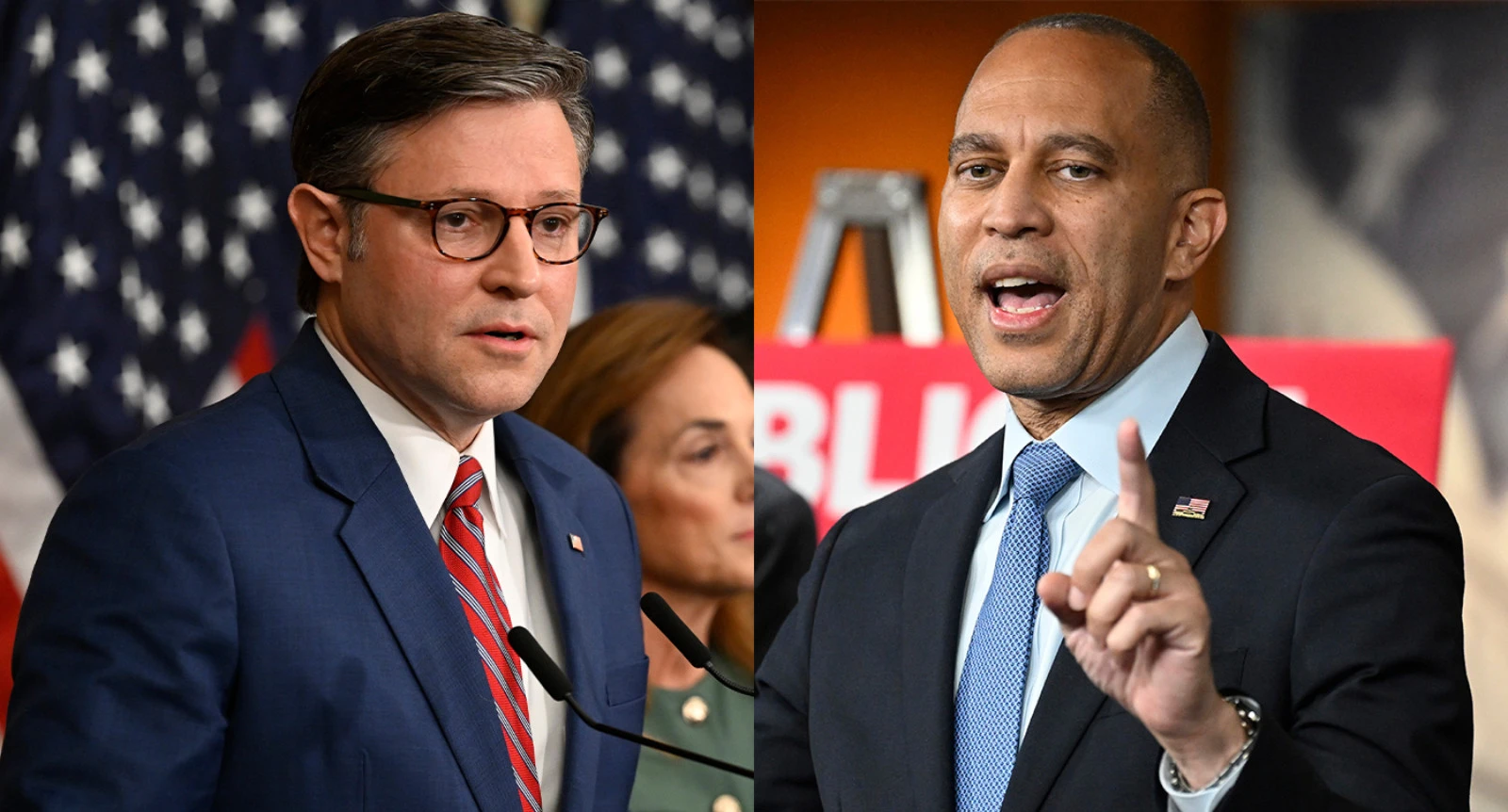
Washington, D.C. - June 14, 2026
Republican-Led States Pursue Mid-Decade Redistricting to Bolster House Majority
Republican-controlled legislatures in multiple states are advancing new congressional district maps designed to increase the party’s advantage in the U.S. House ahead of the 2026 midterm elections. The efforts, encouraged by President Donald Trump and his allies, have drawn sharp opposition from Democrats who view the moves as partisan power grabs.
In North Carolina, Republican lawmakers this week advanced a proposed congressional map that would target the district held by Democratic Rep. Don Davis. The new boundaries are projected to give Republicans a strong advantage in 11 of the state’s 14 House seats, up from the current 10. If enacted, the North Carolina map would bring the total number of newly drawn Republican-favored districts created nationwide this year to seven.
State Sen. Ralph Hise, a Republican overseeing the redistricting process, described the motivation in direct terms during public discussions.
“The motivation behind this redraw is simple and singular: draw a new map that will bring an additional Republican seat to the congressional delegation.”
Hise further argued that Democratic control of the House would allow the party to “torpedo President Trump’s agenda.” The state Senate approved the proposal despite protests at the Capitol in Raleigh. Under North Carolina law, Democratic Gov. Josh Stein lacks veto authority over redistricting plans. The measure now moves to the state House for consideration.
State Sen. Phil Berger, the top Republican in the North Carolina Senate, defended the map’s partisan leanings.
“This new map respects the will of the North Carolina voters who sent President Trump to the White House three times.”
North Carolina remains politically competitive, with Democrats winning recent statewide races. However, Republican leaders maintain that the new lines better reflect the state’s recent voting patterns favoring Trump.
Similar efforts are underway in other Republican-led states. In Texas, lawmakers earlier this year approved a map intended to create five additional GOP-leaning congressional districts. In Missouri, Republicans passed new boundaries projected to add one more Republican seat. Both maps face ongoing legal challenges, and Missouri activists have launched a petition drive to overturn their state’s plan.
California Gov. Gavin Newsom, a potential 2028 Democratic presidential candidate, is pursuing a countermeasure. A November ballot measure would allow the state legislature to temporarily bypass the independent redistricting commission and add five Democrat-leaning districts to offset GOP gains elsewhere.
Republicans hold a structural advantage in the redistricting process nationally. The party controls the governor’s office and both legislative chambers in 23 states, compared with 15 states under full Democratic control. Several additional GOP-led states are exploring new maps. In Kansas, lawmakers have set aside funding for a potential special session that could affect the state’s lone Democratic House member. In Indiana, White House officials and Vice President J.D. Vance have encouraged legislators to pursue an additional seat currently held by Democrats.
Mid-decade redistricting remains relatively uncommon in American political history. Most states redraw congressional lines once per decade following the census. The current wave of activity reflects the narrow Republican House majority and the high stakes both parties assign to control of the chamber heading into the midterms.
Democratic leaders have denounced the Republican efforts as attempts to entrench power through map manipulation rather than through electoral competition. In California, Newsom has framed his state’s potential response as a necessary defense against what he describes as a coordinated national Republican strategy.
The outcome of these redistricting battles will help determine whether Republicans can expand or at least protect their current House majority in 2026. With legal challenges pending in several states and ballot measures still to be decided, the final composition of many districts remains uncertain.
This Changes Everything: Shocking Video Emerges After Corrupt L.A. Mayor's Race

Los Angeles, California - June 14, 2026
Spencer Pratt Releases Video After Mayoral Campaign, Alleges Recordings and Federal Scrutiny of City Leaders
Reality television personality Spencer Pratt released a video on Friday stating that while his campaign for mayor of Los Angeles may be concluding, his effort to challenge the city’s political establishment would continue in a new form.
In the video, Pratt described the shift as a move from the campaign phase to what he called a more aggressive stage of his mission. He said his goal had not been solely to win elected office but to expose what he described as corruption within Los Angeles city government.
Pratt addressed comments made earlier by comedian Jimmy Kimmel, who had joked about providing the Pratt family with a U-Haul to leave the city.
“You think you can get rid of me that easily?” Pratt said. “I didn’t get in this for political power. I got in this to expose this corrupt machine.”
Pratt stated that no longer being an active candidate would free him from certain campaign finance and election laws, allowing him to speak more directly.
“I don’t have campaign laws hamstringing me now,” he said. “It’s war.”
Throughout the video, Pratt accused Los Angeles political leaders and progressive activists of implementing policies that have harmed residents. He also claimed to possess undisclosed recordings involving one of his political opponents that could force a resignation.
“We have some recordings of one of your exalted candidates doing and saying something that would make her resign in shame,” Pratt said. He indicated the material had been held back during the campaign and suggested it could still be released.
Pratt did not identify the individual referenced or provide any supporting evidence. He directly addressed Mayor Karen Bass and City Councilmember Nithya Raman, asking whether they believed any of their employees might hold recordings that could force them to resign.
Pratt further claimed that city officials should be concerned about potential federal investigations.
“I want all of you awake at night sweating, worrying about 5 a.m. with FBI busting in your door,” he said. “I assure you, they’re coming.”
No evidence was presented in the video to support the assertion that federal authorities are conducting investigations into Bass, Raman, or their staffs. Neither Bass nor Raman had issued a public response to the video as of Friday.
The remarks followed weeks of controversy in the Los Angeles mayoral race, including ongoing ballot counting and Pratt’s repeated allegations of election irregularities and voter fraud. Election officials have continued processing ballots in accordance with California law, which allows ballots postmarked by Election Day to be received and counted in the days following the election.
Pratt has not publicly released evidence substantiating his claims of widespread fraud. The video appears intended to maintain his public profile and continue criticism of city leadership outside the formal constraints of an active campaign.
May you like


Pratt characterized his ongoing efforts as part of a broader fight against entrenched political interests rather than a pursuit of elected office itself. He concluded the video by indicating that his activities against what he views as the city’s political establishment would intensify.
The statements remain unverified. No recordings or documentation supporting the allegations have been made public, and no confirmation of active federal investigations into the named officials has been provided by law enforcement authorities.