SCOTUS COULD END IT — Justices Poised to Stop California Elections Nightmare
SCOTUS COULD END IT — Justices Poised to Stop California Elections Nightmare
Washington, D.C. - June 8, 2026
Supreme Court Considers Challenge to State Laws Allowing Post-Election Day Ballot Receipt
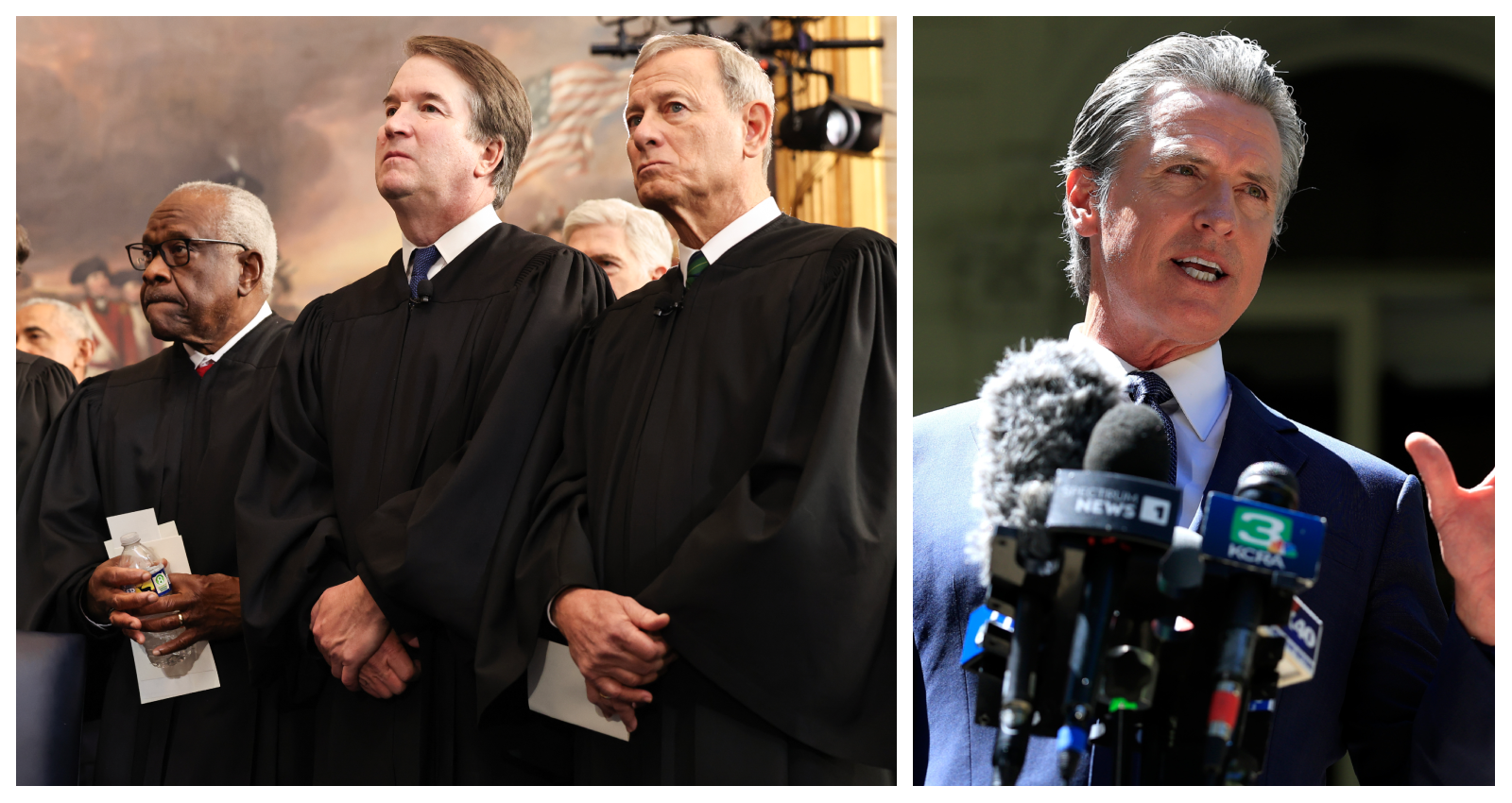
The U.S. Supreme Court is weighing a case that could reshape how states administer federal elections by determining whether ballots mailed by Election Day but received afterward must be counted. The case, Watson v. Republican National Committee, centers on a Mississippi law permitting absentee ballots postmarked by Election Day to be counted if received within five business days.
Case Background and Procedural History
Mississippi enacted House Bill 1521 in 2020, creating a grace period for late-arriving absentee ballots during the COVID-19 pandemic. The Republican National Committee and other plaintiffs challenged the law in 2024, arguing it conflicts with federal statutes that establish a single national Election Day for presidential, Senate, and House contests.
A federal district court initially upheld Mississippi’s policy. The U.S. Court of Appeals for the Fifth Circuit later ruled that federal election law preempts the state’s post-Election Day receipt window. Mississippi appealed, and the Supreme Court agreed to hear the case.
Oral arguments took place in March. A decision is expected before the end of the Court’s current term this month.
Arguments Presented
Challengers contend that federal law requires ballots to be received by Election Day to be counted in federal races. They argue that allowing later receipt undermines the uniform national Election Day established by Congress.
Mississippi officials and supporters of the law maintain that states hold primary authority over election administration. They assert that ballots cast by Election Day should remain valid even if delayed by postal service issues beyond the voter’s control.
During oral arguments, justices focused on the interpretation of federal statutes setting a single Election Day. Observers noted extensive questioning about whether post-Election Day receipt aligns with congressional intent.
Potential Nationwide Impact
Approximately 15 states and the District of Columbia currently permit at least some ballots to arrive after Election Day if they meet postmark requirements. California allows mail ballots postmarked by Election Day to be counted if received within seven days.
A ruling in favor of the challengers could require states to adopt a uniform receipt deadline of Election Day for federal elections. Proponents say this would create clearer standards and shorten the period during which outcomes remain unresolved.
Opponents warn that such a ruling could disenfranchise voters whose ballots experience unavoidable postal delays.
Broader Implications
The case has drawn significant attention because its outcome could affect election procedures in multiple states ahead of the 2026 midterm elections. Election officials, political parties, and advocacy groups are monitoring developments closely.
A decision upholding Mississippi’s law would preserve state flexibility on ballot receipt deadlines. A ruling against the law would likely compel revisions in states with similar grace periods and establish a nationwide standard for when ballots must be received in federal contests.
The dispute highlights ongoing debates over balancing election security, uniformity, and access. The Supreme Court’s ruling, expected by the end of June, could set precedent governing ballot deadlines for years to come.
Top Democrat SHREDDED After Backing Graham Platner - His Career Is Over


Washington, D.C. - June 8, 2026
Democratic Senate Candidate Graham Platner Faces Scrutiny Over Past Conduct and Tattoo
Democratic candidate Graham Platner, running for the U.S. Senate in Maine, is facing renewed attention over allegations regarding his past personal conduct and a tattoo with Nazi-themed imagery. The controversy has drawn comments from supporters and critics alike as the race continues.
New York Times Report and Allegations
A New York Times report detailed allegations from an ex-girlfriend describing toxic and volatile elements in past relationships, including claims of abusive behavior. The report also examined a tattoo Platner received that featured imagery associated with Nazi symbolism.
Platner has denied the most serious allegations. In an interview with MSNBC’s Chris Hayes, he stated that claims of physical abuse were untrue and described the reporting as politically motivated.
“Anything alleging physicality, anything alleging that I knew what my tattoo was, these are the statements of someone who’s politically motivated,” Platner said.
When asked directly whether the ex-girlfriend was lying about the abuse, Platner replied, “Yes, that is not true.”
He has also criticized media coverage of the allegations as journalistic malpractice and attacked the whistleblower who released related text messages.
Support from Rep. Ro Khanna
Rep. Ro Khanna of California, who has been described in some media outlets as a moderate Democrat, has publicly backed Platner. After the Times report, Khanna acknowledged that some of Platner’s past relationships were “wrong and toxic.” He noted that Platner had sought redemption and taken accountability.
At a campaign rally for Platner in Maine, Khanna addressed the allegations directly.
“No one should make excuses for his past relationships, some of which were toxic and volatile, and no one on our side should attack any of the women who came forward,” Khanna said.
“You know why? Because Democrats believe in respecting the equality and dignity of women. And we always will.”
Khanna stated that Platner hated misogyny and had worked to become a better person. He also suggested that Platner’s service in the War on Terror had affected him, saying the experience had “broken” many service members and that “sometimes I think we’re broken as a country.”
Context of the Race
Platner is seeking the Democratic nomination for the U.S. Senate seat in Maine. The race has drawn national attention because of the candidate’s background and the controversies surrounding his personal history. Supporters have emphasized his military service and personal growth, while critics have questioned whether the allegations and the tattoo raise serious concerns about his fitness for office.
May you like



The developments come amid broader debates within the Democratic Party about candidate vetting and responses to allegations of misconduct. Platner has maintained that he is committed to accountability and has rejected characterizations of his past actions.
The outcome of the Maine Senate race and the handling of these issues by Democratic leaders are expected to be closely watched in the coming months.