Chapter 1 - The Trap and the Legacy of Grace
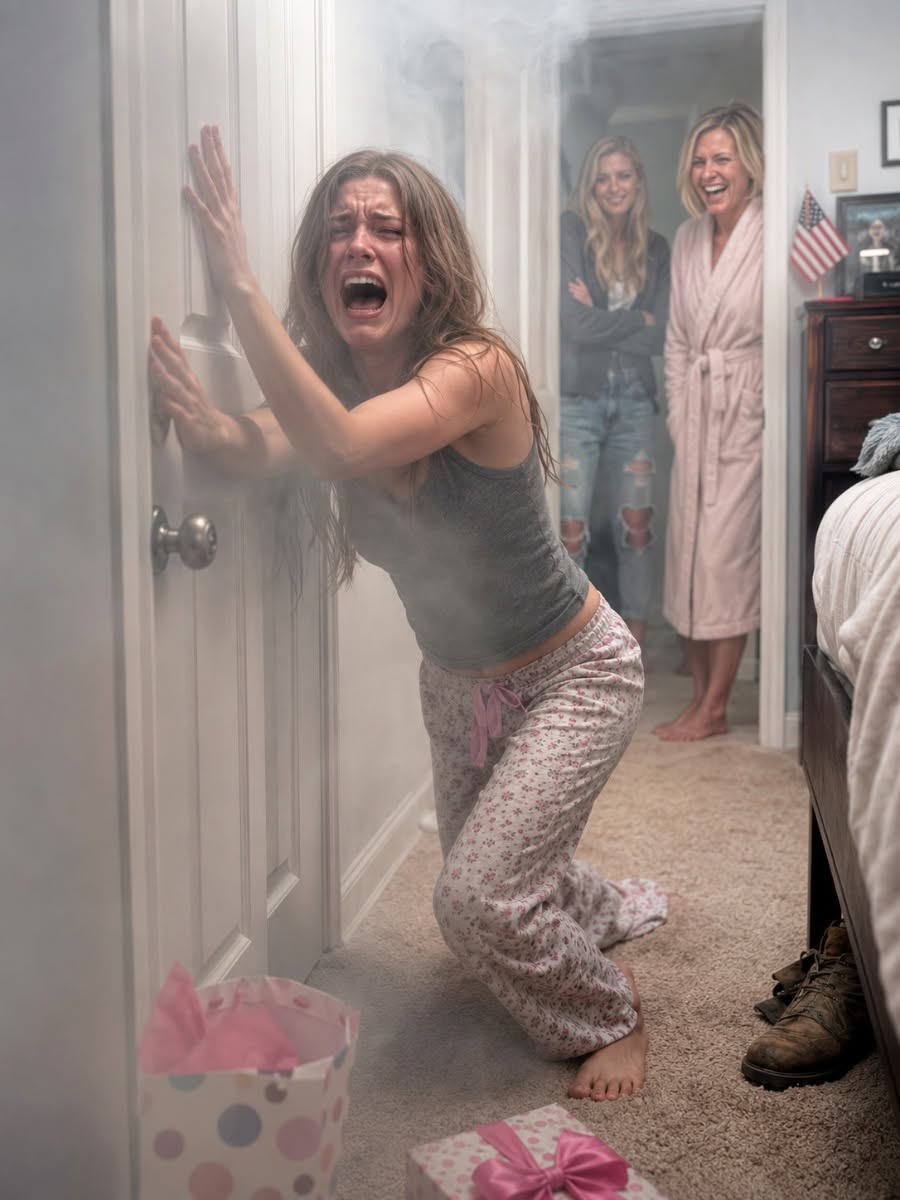
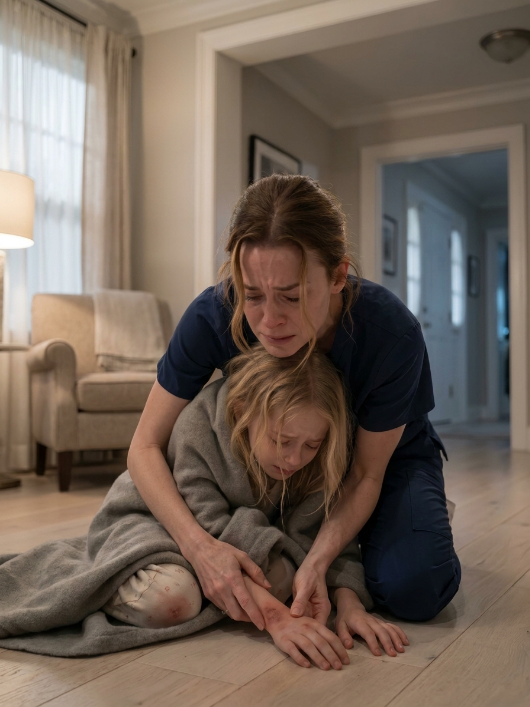
“Let her burn,” my sister said, and the bedroom door locked from the outside. Smoke clawed down my throat as I screamed barefoot against the wood, while my mother laughed in the hallway like my terror was entertainment. I had come home with her birthday gift. They left me there to die. But the old boot held my secret....
My sister locked me inside a burning bedroom.
My mother stood outside the door and laughed.
Not nervous laughter.
Not panic.
The kind of laugh you hear from someone watching a bad reality show on Bravo while folding laundry.
I was twenty-seven years old, barefoot on the second floor of my childhood home in Ohio, choking on smoke while my family waited to see if I would stop screaming.
The worst part?
I had gone there for dinner.
A birthday dinner.
My mother’s birthday, actually, because apparently I had not learned the difference between forgiveness and walking into a trap with a wrapped gift from Barnes & Noble.
My name was Caitlyn Monroe then.
I don’t use that last name anymore.
Monroe belonged to the woman outside that door.
The woman who taught eighth-grade English, wore pearl earrings to parent conferences, brought lemon bars to church fundraisers, and told everyone she had raised two daughters “with grace after tragedy.”
Grace.
That was her favorite word.
She used it the way other people used bleach.
To cover stains.
Our house sat on Bennett Street in a tidy suburb outside Columbus, Ohio. White siding. Red front door. Hydrangeas in the yard. A mailbox my mother repainted every spring because “neighbors notice these things.”
People loved our house.
They loved my mother, Deborah.
They loved my older sister, Jessica.
And they tolerated me.
That was the family arrangement.
Jessica was the golden child with blonde highlights, Lululemon leggings, a Lexus lease she couldn’t afford, and the emotional depth of a clearance rack candle.
I was the younger one.
The quiet one.
The difficult one.
The one who ruined photos by not smiling hard enough.
At least that was the version my mother sold.
She sold it everywhere.
Church picnics.
School events.
Target checkout lines.
Once, when I was fourteen, the cashier at Kroger asked if I was excited for summer break.
Before I could answer, my mother smiled and said, “Caitlyn struggles with transitions.”
The cashier blinked.
I stared at the conveyor belt, watching a carton of eggs slide forward like it had more freedom than I did.
My mother had a talent for making cruelty sound clinical.
Jessica learned from the best.
She could insult me with one hand on a Starbucks cup and the other scrolling Instagram.
“You’re not ugly,” she told me once before homecoming. “You just photograph like a hostage.”
Then she borrowed my mascara and never gave it back.
When I complained, my mother said, “Don’t be petty.”
When Jessica screamed, she was passionate.
When I raised my voice, I was unstable.
When Jessica lied, she was overwhelmed.
When I told the truth, I was being dramatic.
That word followed me through childhood like a tracking device.
Dramatic.
Sensitive.
Difficult.
Ungrateful.
By thirteen, I had a prescription bottle with my name on it.
By fourteen, I had three.
My mother said the pills were “to smooth my edges.”
I didn’t know children were supposed to have edges.
I thought we were supposed to have parents.
The first doctor barely looked at me.
My mother did most of the talking.
“She lashes out.”
“She withdraws.”
“She has episodes.”
I sat beside her in a paper gown, staring at a motivational poster of a sailboat, wondering how many lies it took before adults started calling them symptoms.
The doctor nodded.
My mother nodded back.
A week later, there was a little white pill beside my chicken casserole.
“Take it,” she said.
“What is it?”
“Something to help you.”
“Help me with what?”
Her fork paused halfway to her mouth.
“With being less exhausting.”
Jessica laughed into her Diet Coke.
I took the pill.
Because at thirteen, you still think obedience might eventually buy love.
It doesn’t.
It buys more rules.
No locked doors.
No sleepovers.
No phone after eight.
No art club because “messy girls don’t get taken seriously.”
No closed windows.
No disagreeing in front of guests.
No crying where people could see.
My room was not my room.
It was a holding cell with Pottery Barn bedding.
My mother picked the curtains.
Jessica stole the good lamp.
And if I moved anything, my mother noticed before dinner.
“Control creates safety,” she used to say.
Funny how safe people never needed to announce it.
By high school, I had learned to survive in pieces.
A little silence here.
A fake smile there.
Straight A’s because grades were the only thing my mother couldn’t twist fast enough to hit me with.
I drew when no one was watching.
Girls in cages.
Girls behind glass.
Girls with mouths stitched shut.
Then I met Maya.
She sat beside me in advanced art class junior year wearing ripped jeans, red Converse, and the kind of confidence that made teachers sigh before she even opened her backpack.
She looked at my sketch one day and said, “That’s not just a birdcage.”
I froze.
Most people saw graphite.
Maya saw evidence.
I closed the sketchbook.
She lowered her voice.
“Whatever it is, you’re not crazy.”
I almost laughed.
That was a dangerous sentence in my house.
Over the next few weeks, I told her things.
Small things first.
My mother checked my phone.
Jessica read my notebooks.
The pills made school feel like walking through fog.
My bedroom door didn’t lock from the inside.
Maya listened without making the sad face adults made right before they did nothing.
Finally, she said, “Caitlyn, that’s abuse.”
I stared at her.
The word sat between us like contraband.
Abuse was for Lifetime movies.
For neighbors you saw on the news.
For people with black eyes and police reports.
Not girls with clean report cards and monogrammed towels.
But once Maya said it, I couldn’t unsay it.
Neither could my mother.
Jessica saw us talking outside the art building two days later.
That night, my mother took my phone.
The next morning, Maya’s parents called her into their kitchen.
By lunch, Maya wouldn’t look at me.
After school, she pulled me into the library stairwell and whispered, “My parents said I can’t hang out with you anymore. Your mom told them you’re unstable and obsessed with me.”
I didn’t move.
Maya grabbed my hand.
“I don’t believe her.”
That helped.
Not enough.
But enough to keep me alive.
After that, I stopped hoping my family would change.
Hope was too expensive.
Planning was cheaper.
I started hiding money.
Loose quarters.
Birthday cash.
A ten-dollar bill from babysitting that I tucked inside a paperback copy of Jane Eyre because Jessica said books made her “want to nap.”
I made a secret email account on a library computer.
I took tiny freelance design jobs online.
Flyers.
Logos.
Birthday invitations for moms in Idaho who wanted glitter fonts and somehow always asked for “classy but fun.”
I bought a prepaid phone from Walmart with cash and hid it inside an old boot.
Left boot.
Under the insole.
That detail saved my life later.
I also stopped swallowing the pills.
Not all at once.
I wasn’t stupid.
My mother watched too closely.
I tucked them under my tongue, spit them into toilet paper, flushed them later.
Slowly, my brain came back.
The fog lifted.
So did the excuses.
I wrote everything down.
Dates.
Times.
Things my mother said.
Things Jessica did.
The way my mother smiled at neighbors and hissed at me before the front door closed.
Documentation became my religion.
At twenty, I got into a state university two hours away with a full scholarship for digital media.
My mother had picked a small religious college called Evermore, the same place Jessica had gone before getting engaged to a man with veneers, a trust fund, and the personality of hotel lobby art.
At dinner, my mother said, “Evermore is our legacy.”
I said, “It sounds like a prison with tuition.”
Jessica looked up from her salad.
“Oh my God, listen to you. One scholarship and suddenly you’re Ruth Bader Ginsburg.”
I slid the acceptance letter across the table.
“I’m going to State.”
My mother’s face changed.
Not much.
Just enough.
A muscle jumped near her jaw.
“No,” she said.
“That wasn’t a question.”
She folded her napkin.
“If you leave, don’t expect to come back.”
I looked around the dining room.
The staged family photos.
The spotless china cabinet.
Jessica smirking like she had front-row tickets to my downfall.
“Great,” I said. “One less key to carry.”
I packed that night.
Jessica stood in my doorway, arms crossed.
“You’ll be back in a month.”
“Maybe,” I said, zipping my suitcase. “But I’ll still have experienced indoor plumbing without surveillance.”
She rolled her eyes.
“You think you’re special.”
“No. That was your job.”
For the first time in my life, she had nothing ready.
College was not glamorous.
My first apartment had thin walls, a crooked stove, and a bathroom fan that sounded like a helicopter losing a lawsuit.
But it had a lock.
A real lock.
On the inside.
I used to stand there at night and turn it just to hear the click.
May you like

I painted one wall green.
I ate cereal for dinner